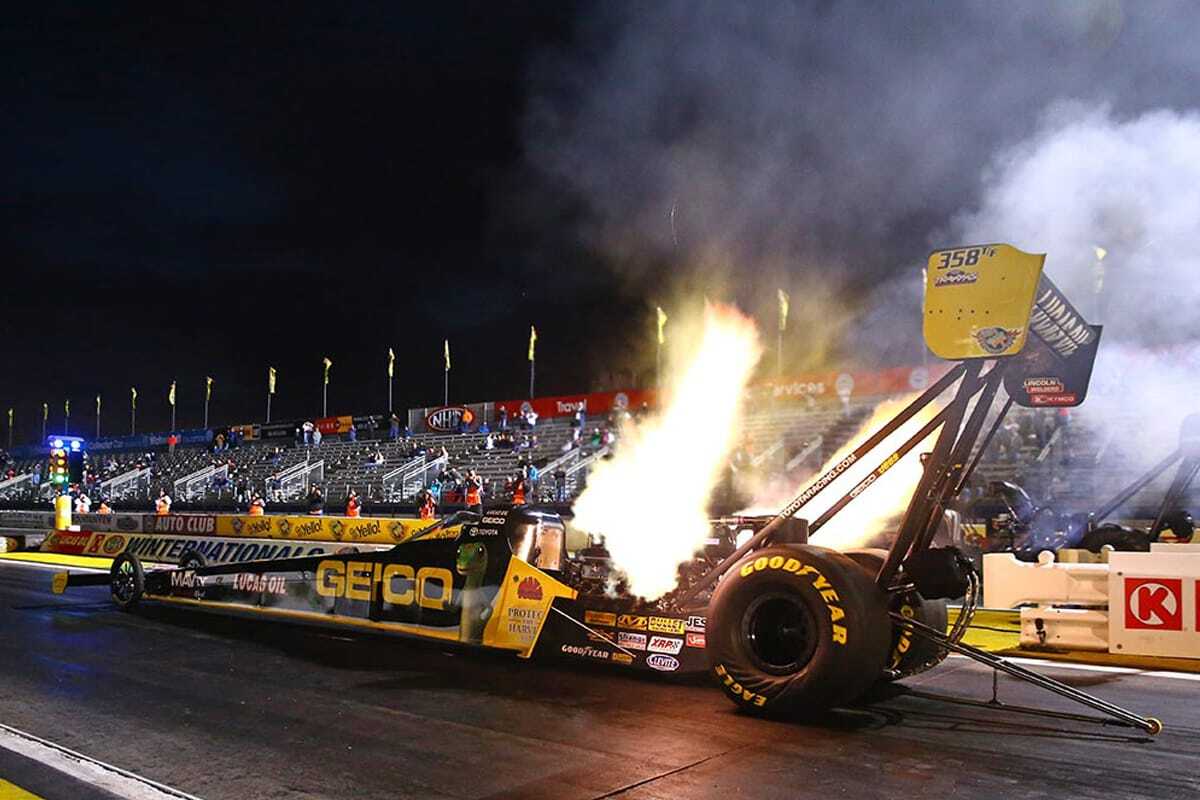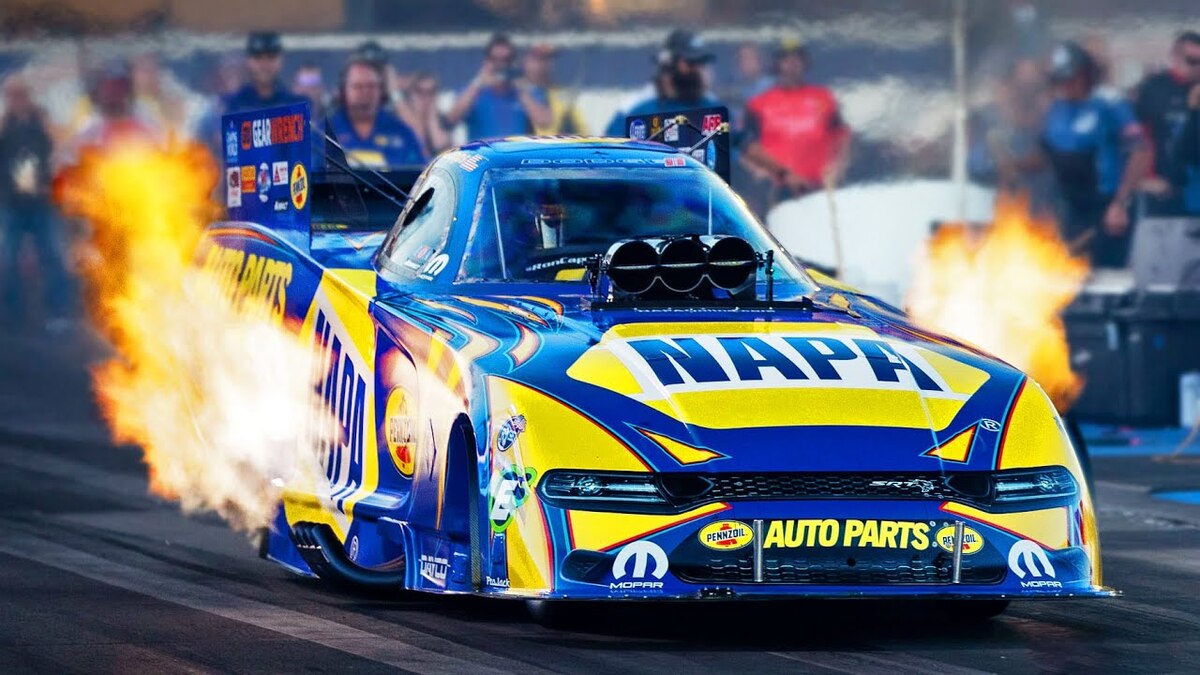
A Top Fuel dragster is the fastest-accelerating racing vehicle in the world, capable of reaching speeds over 330 mph (531 km/h) in under 3.7 seconds across a 1,000-foot track.
Engine & Power
* Powered by a 500-cubic-inch supercharged Chrysler Hemi-based V8 engine that produces upward of 11,000 horsepower.
* The supercharger alone requires roughly 1,000 horsepower just to operate and forces air into the engine at up to 65 PSI.
Fuel & Consumption
* Burns a specialized mixture of up to 90% nitromethane and 10% methanol.
* The engine consumes 10 to 15 gallons of fuel per run, burning approximately 1.5 gallons per second at full throttle.
Acceleration & G-Forces
* Accelerates from a standstill to 100 mph in less than 0.8 seconds.
* Drivers experience launch forces between 4 and 8 Gs, which is greater acceleration than a catapult-assisted fighter jet or the Space Shuttle.
Aerodynamics & Downforce
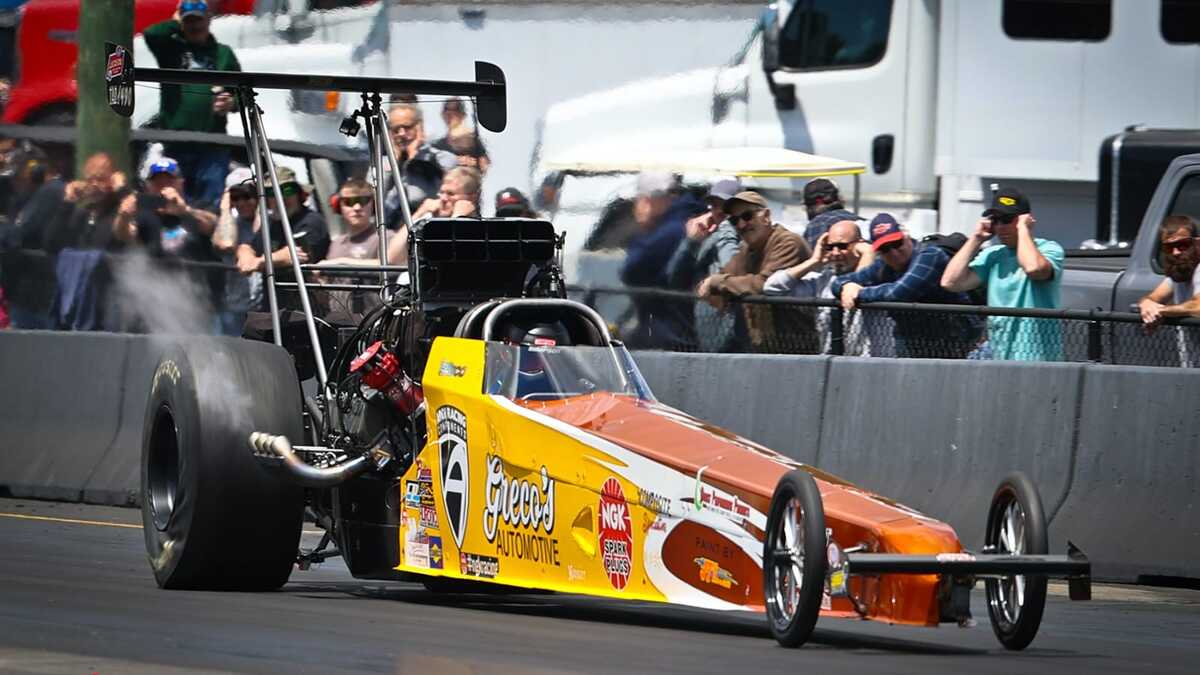
* Features a custom-built, open-cockpit rail chassis that measures up to 25 feet long.
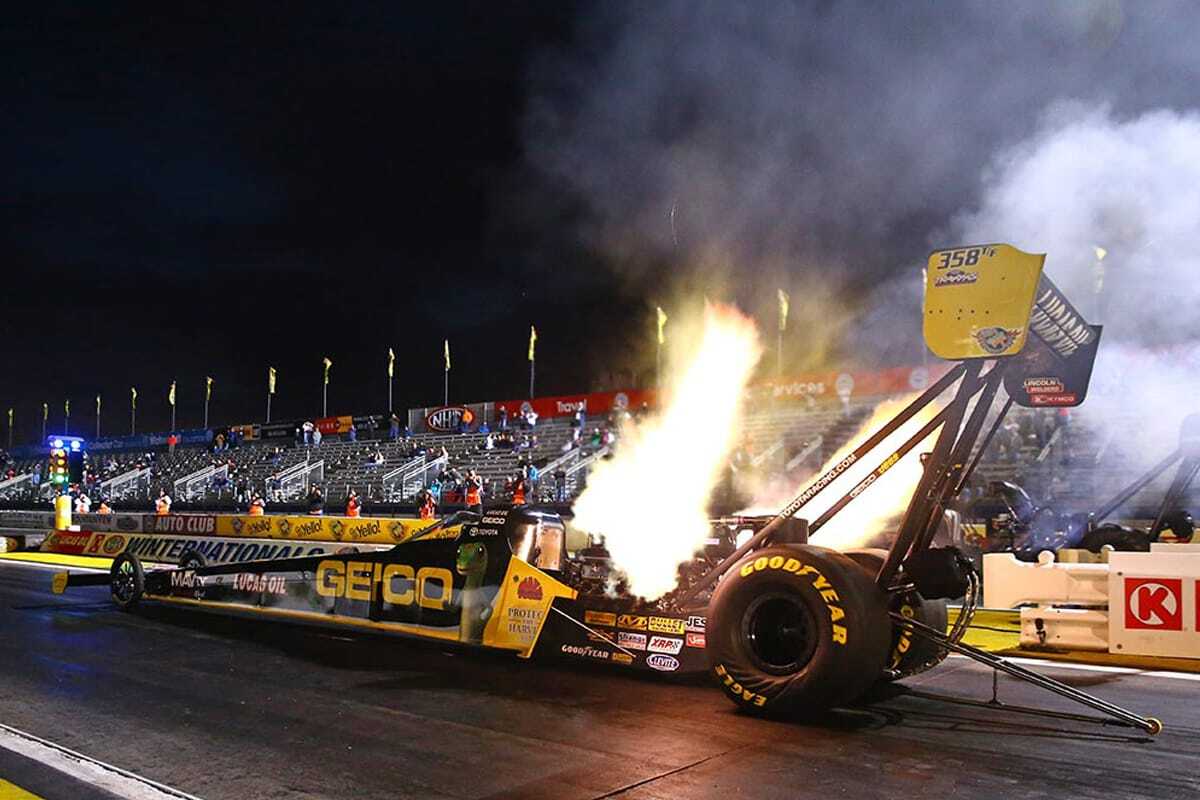
* The massive rear wing generates up to 12,000 pounds of downforce at peak speeds to keep the tires on the track.
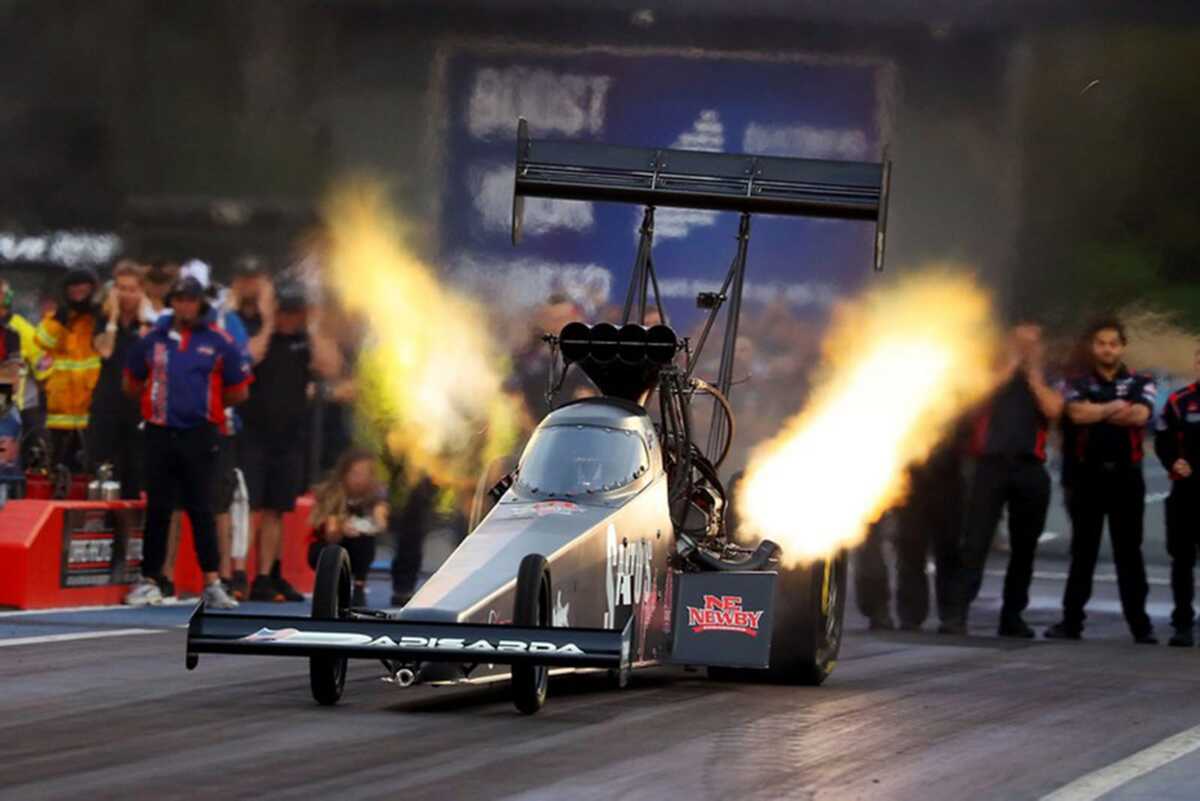
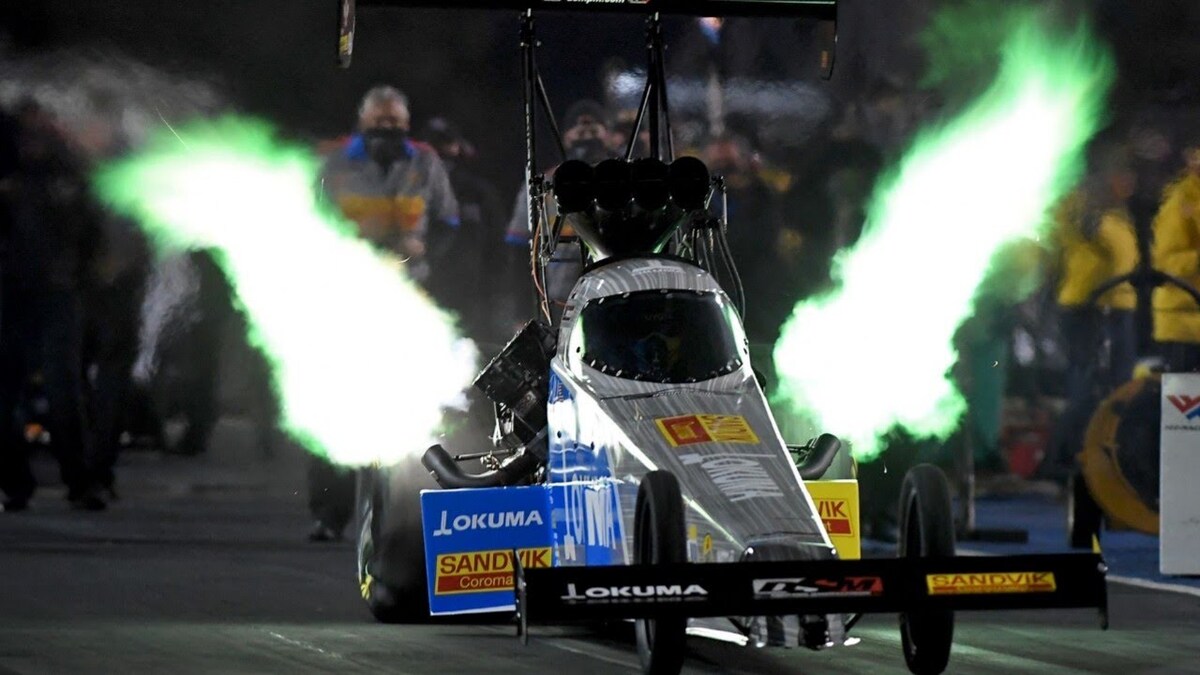
* The angled exhaust headers provide an additional 900 to 1,100 pounds of downward thrust from the escaping exhaust gases.
Extreme Mechanical Stress
* The extreme internal pressure and 7,050-degree Fahrenheit flame fronts cause the spark plug electrodes to completely disintegrate mid-run.
* By the end of a pass, the engine is dieseling purely off the heat of 1,400-degree exhaust valves and can only be stopped by cutting the fuel flow.
* Due to the immense mechanical toll, the entire engine is stripped down and rebuilt in about 40 minutes between every single race.
Safety & Stopping
* Relies on twin parachutes deployed immediately after the finish line to slow the dragster from 330+ mph, as wheel brakes are only effective at lower speeds.
* Built with carbon-fiber driver compartments, automatic fuel shutoffs, and onboard fire suppression systems to protect drivers in the event of an explosion.